
Criminal Court Records in Carver County
A criminal court record begins when a criminal charge is filed in Carver County District Court. The court file is maintained by Court Administration, led locally by Court Administrator Mary Dalbec. It can include the complaint, citation, warrant entries, bail or bond information, hearing notices, attorney appearances, plea entries, motions, orders, disposition, sentencing, restitution, fines, probation events, and public documents available online.
Carver County District Court has original jurisdiction over criminal and traffic matters filed in the county. The County Attorney's Office, led by County Attorney Mark Metz, prosecutes adult felonies and many county-level criminal matters. Public defender applications are available through the Court Administrator's Office, and a District Court judge reviews eligibility for a person charged with a misdemeanor, gross misdemeanor, or felony.
How to Search Carver County Criminal Court Records
Use MCRO Case Search for criminal case records. Search by case number when available, especially for non-conviction criminal matters, because Carver copy-request instructions warn that criminal cases without a conviction may not appear by defendant-name search. Name searches can still be useful for public conviction cases and other accessible criminal files, but date of birth and county filters are important for separating similar names.
- Open MCRO Case Search and choose Name or Case Number.
- For a name search, enter first and last name, add date of birth if known, and select Criminal as the case category.
- Use Court Locations to narrow the search to Carver County.
- Open the case result and review the Register of Actions, charges, hearing history, disposition, sentence, and public documents.
- Use Hearing Search or the Carver daily calendar when the immediate question is a hearing date, courtroom, or remote appearance.
- Request certified copies from Carver County Court Administration when official documents are needed.
The BCA Public Criminal History Search home page is the statewide public criminal-history channel, not the court case file.
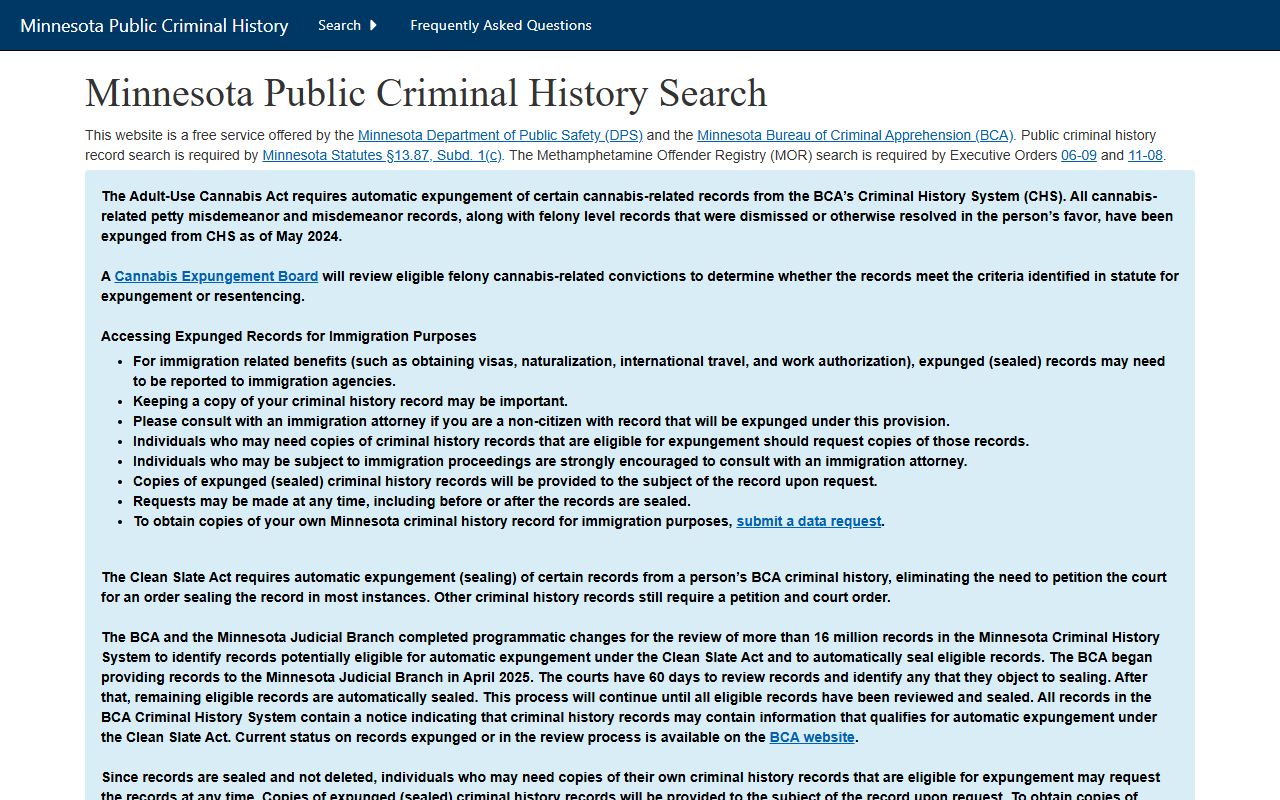
BCA search results are useful for public conviction-history checks, while MCRO remains the court-record source for case activity, hearings, documents, and dispositions.
Stages of a Criminal Case
A criminal court record changes as the case moves from filing to outcome. A single arrest can lead to one or more charges, but the criminal court case is the official judicial file once the charge is filed. Calendar entries from Carver show First Appearance, Arraignment, Omnibus Hearing, Motion Hearing, Plea Hearing, Probation Violation Hearing, Review Hearing, Court Trial, and Pre-trial events.
Case flow: Arrest or citation › Charges filed › First appearance or arraignment › Omnibus or motion hearings › Plea or trial › Disposition › Sentencing › Probation, restitution, or warrant follow-up.
| Stage | What Happens |
|---|---|
| Charges Filed | The prosecutor files a complaint, citation, or other charging document that opens the court case. |
| First Appearance or Arraignment | The defendant appears, rights and conditions are addressed, and plea or scheduling issues may begin. |
| Omnibus / Motions | Evidence, procedure, probable cause, suppression, discovery, or other pretrial issues may be heard. |
| Plea or Trial | The case resolves by plea, trial verdict, dismissal, acquittal, or other disposition. |
| Sentencing | The court enters penalties, probation, custody, fines, fees, restitution, or conditions when applicable. |
| Post-Disposition | Probation violations, reviews, warrants, payments, and expungement requests may create later entries. |
What a Carver County Criminal Court Record Shows
Criminal records can include more than the charge name. The Register of Actions shows the procedural history, while public documents may include complaints, orders, notices, judgments, or sentencing records if remotely available. Carver calendar examples include 10-CR criminal case numbers and 10-VB traffic or citation-related numbers. The court file may also point to bail, warrants, probation violations, restitution, and fine obligations.
| Field | What It Shows |
|---|---|
| Case Number | The District Court file number, such as a 10-CR or 10-VB Carver case. |
| Defendant | The person charged and the party role shown in the case. |
| Charges | Offense descriptions, charge counts, severity, statute references when shown, and amendments. |
| Hearings | First appearance, arraignment, omnibus, motion, plea, trial, review, or violation events. |
| Plea | The defendant's formal response to a charge when entered. |
| Disposition | Outcome such as guilty, dismissed, acquitted, continued, or otherwise resolved. |
| Sentence | Custody, probation, fines, fees, restitution, conditions, or other penalties. |
| Warrant or Bail | Release conditions, bond/bail entries, bench warrants, or failure-to-appear activity when public. |
Charges vs. Convictions
A charge is an accusation filed in court. A conviction is an outcome after a guilty plea, guilty verdict, or other qualifying finding. Criminal court records can show pending charges, dismissed charges, amended charges, acquittals, and convictions in the same case history. The BCA public criminal-history system is narrower because public CHS data is conviction-history data, generally public for 15 years after sentence completion.
| Charge | Conviction | |
|---|---|---|
| Meaning | An allegation filed by a prosecutor or by citation. | A court outcome based on plea or verdict. |
| Where it appears | MCRO case file, jail roster charge details, charging document. | MCRO disposition and BCA public criminal history when eligible. |
| Can change | Can be amended, reduced, dismissed, or added. | Can be appealed, corrected, sealed, expunged, or affected by later relief. |
| Use caution | Does not prove guilt. | Still needs context for sentence, completion, expungement, and identity match. |
BCA Criminal History vs MCRO
The BCA Public Criminal History Search requires first name, last name, middle name, and date of birth. It is the official statewide public source for criminal-history data, while MCRO is the court-record portal. The BCA page also carries notices about cannabis expungement and Clean Slate review. Those notices matter because BCA criminal-history visibility and court-record visibility can change through different processes.
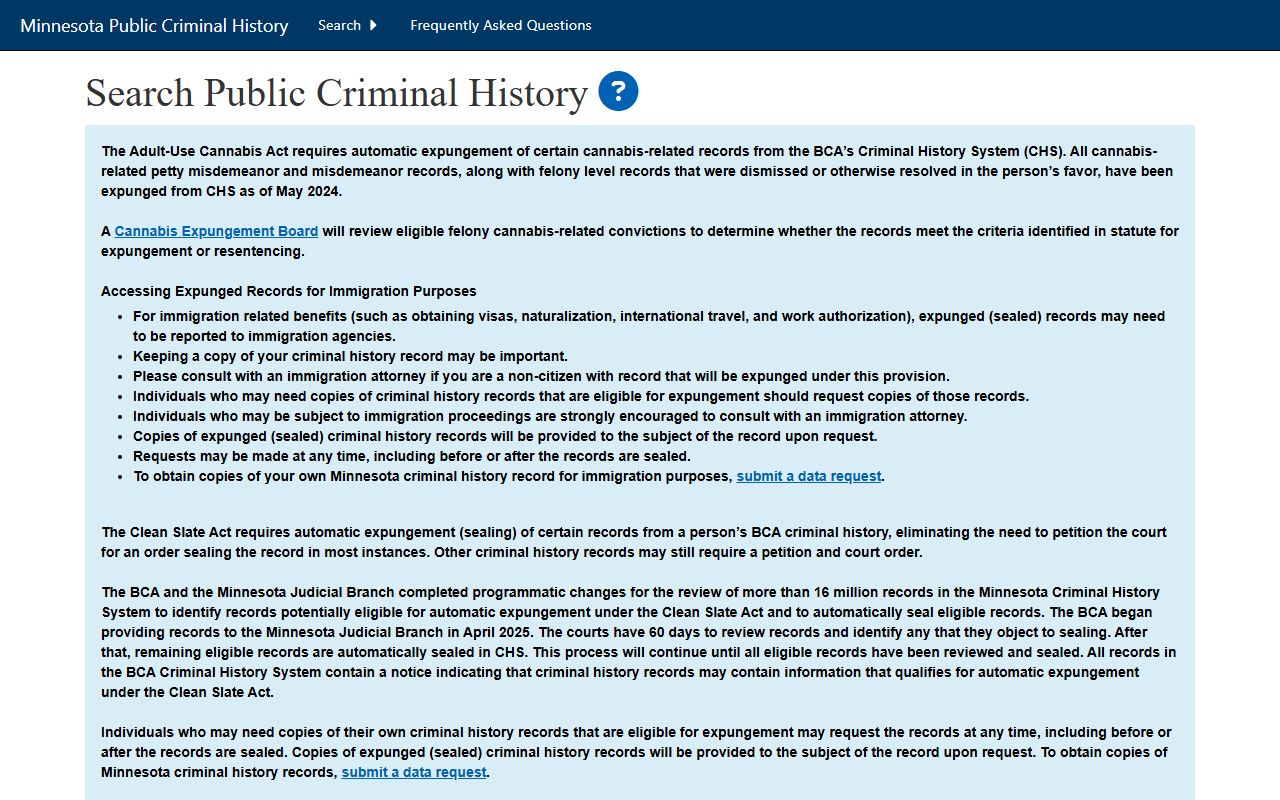
Use BCA for statewide conviction-history searching, and use MCRO or Court Administration for the underlying Carver County criminal court case file.
Sealed vs. Expunged Records
Sealing and expungement reduce public visibility, but the practical effect depends on the court order, statute, agency, and record system. MCRO FAQ material says a case may not appear because it has been expunged. Minnesota chapter 609A governs criminal expungement. BCA CHS notices state that certain cannabis records were expunged from CHS as of May 2024, and Clean Slate review began with BCA records provided to courts in April 2025.
| Sealed | Expunged | |
|---|---|---|
| Public visibility | Hidden from ordinary public access under rule, statute, or order. | Removed from public view or sealed under Minnesota expungement authority. |
| System affected | Can affect court records, agency records, or specific documents. | Can affect court records and criminal-history records differently. |
| Authority | Court rule, statute, or court order. | Minn. Stat. chapter 609A, Clean Slate, cannabis relief, or court order. |
| Practical step | Ask Court Administration about access authority. | Use Judicial Branch expungement forms or Guide & File when eligible. |
The Minnesota criminal expungement chapter is available from the Revisor at Minn. Stat. chapter 609A.
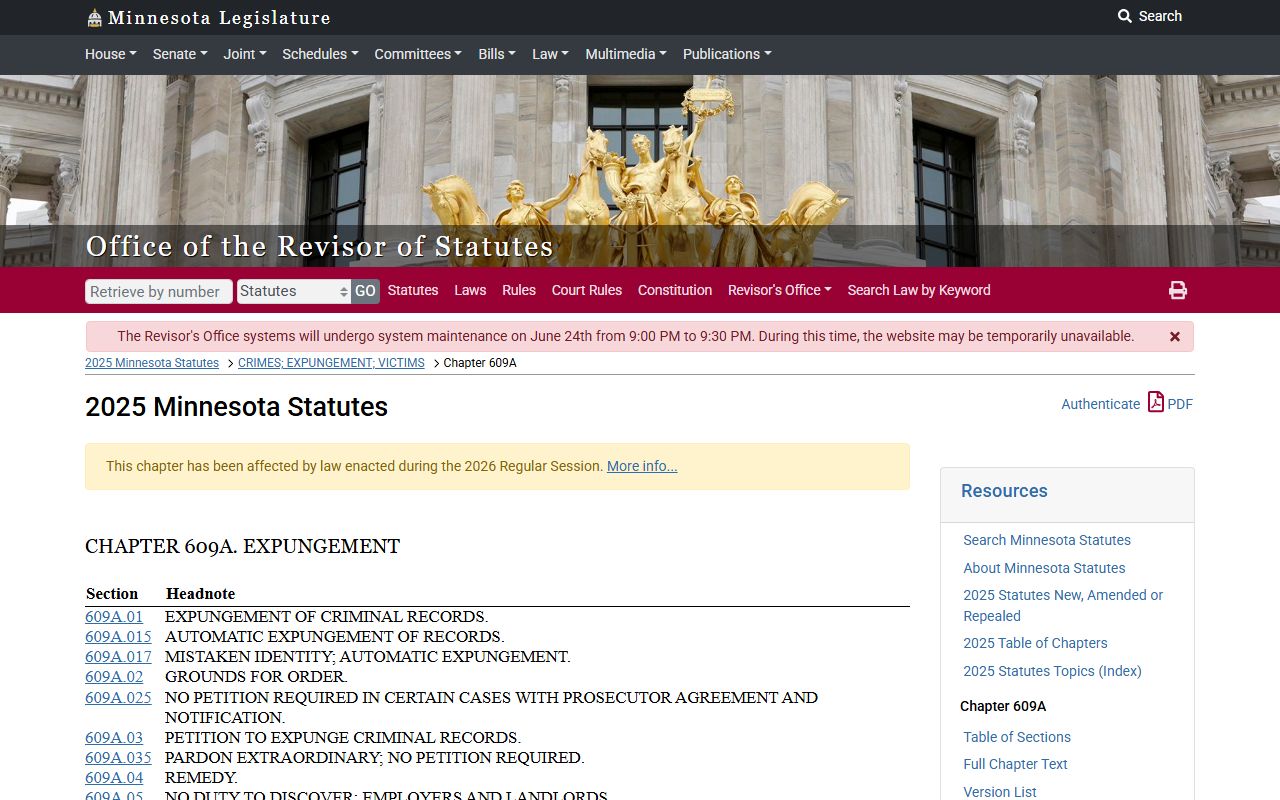
Expungement research should identify both the court case and any separate BCA criminal-history entry because they are not the same record system.
Public Access to Criminal Court Records
Minnesota Public Access Rule 4 makes court case records accessible unless a rule, statute, or court order makes them not accessible. Rule 8 explains limits on remote access, copying, bulk distribution, and online access. Restricted criminal-related records can include sealed cases, expunged cases, juvenile delinquency records under Minn. Stat. section 260B.171, domestic abuse or harassment materials, personal identifiers, victim information, protected health information, and active investigative law-enforcement data.
For arrest reports, incident reports, 911 audio, photos, video, civil process, or sheriff data connected to a criminal event, the correct route is the Carver County Sheriff Records Unit. Requests can be made by phone at 952-361-1105, by email at Sheriff-Records@carvercountymn.gov, by mail to 606 East 4th Street, Chaska, or in person. Sheriff's records are governed by the Minnesota Government Data Practices Act and law-enforcement data classifications.
County Attorney and Public Defender Context
The Carver County Attorney's Office is the local prosecutor, not a District Attorney office. The office is open Monday-Friday, 8:00 a.m. to 4:30 p.m., and lists main phone (952) 361-1400. Mark Metz has served as elected County Attorney since 2011. Staff information identifies adult criminal division attorneys and a prosecutor assigned to Drug Treatment Court and Veterans Treatment Court.
Public defender services are handled through the Minnesota Board of Public Defense regional structure. The Judicial Branch public defender topic says a defendant should ask for a public defender as early as first appearance and complete an application. The Carver County Attorney FAQ says applications are available from the Carver County Court Administrator's Office and reviewed by a District Court judge.
The Minnesota Board of Public Defense offices page lists statewide public defender office information.
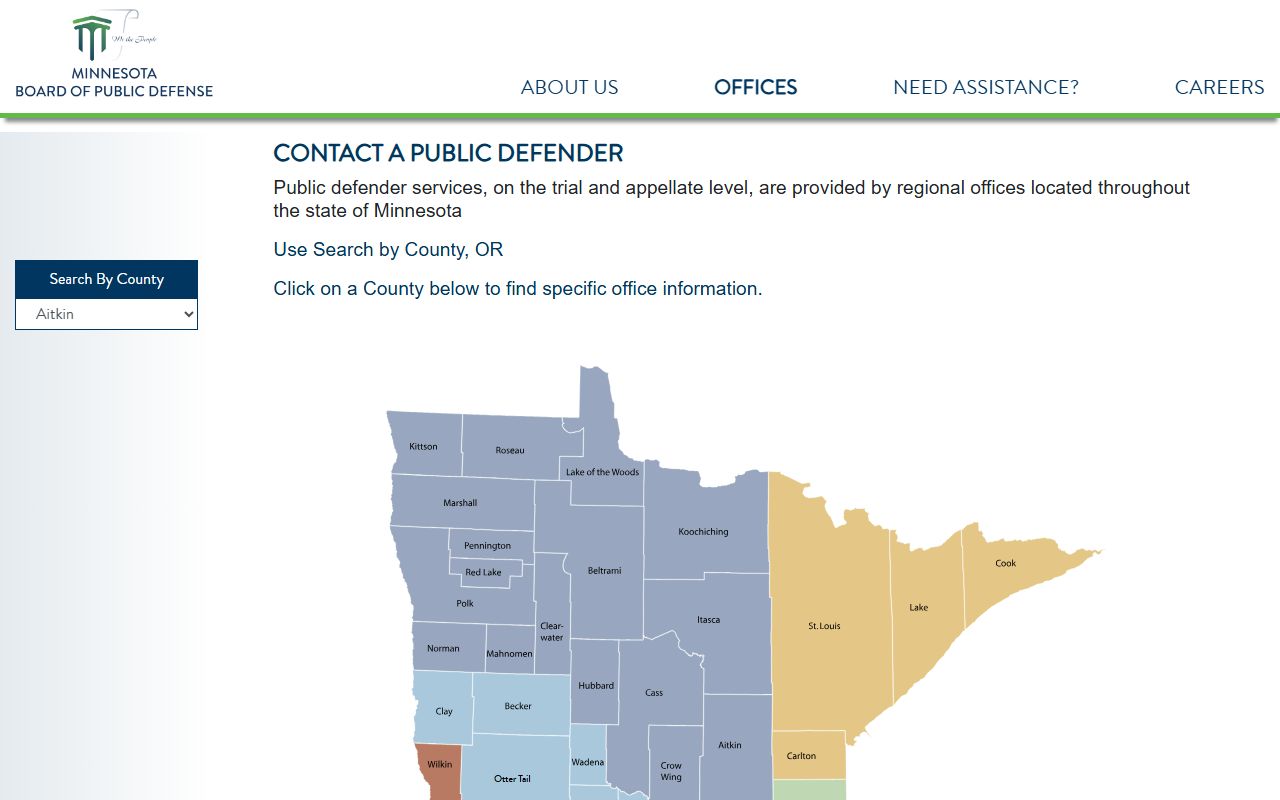
Public defender information belongs with criminal court records because counsel appointments, appearances, and hearing scheduling can become part of the court case history.